 Menorca Boat Tours
What to Bring on a Boat Trip in Menorca: The Full Kit List
A boat-trip packing list for Menorca is short, but it is ordered by hard rules rather than good intentions: the Mediterranean sun really does burn through a low factor on reflecting water, Spanish boat decks really do ask for shoes off, and the cheaper tickets really do stop at a single drink. This list is assembled from what the tours compared here compared on this site state in their own inclusions, restrictions and boarding notes - checked September 2026 - plus what recent traveller reviews say they wished they had carried. It covers what goes in the bag, what stays at the hotel, and the two Menorca specifics (wind and shade) that separate this island from a generic Mediterranean checklist. For when to sail rather than what to carry, the season-by-season guide handles the calendar; the full comparison table handles the boats, and it is the practical what to bring on a boat trip menorca guide.
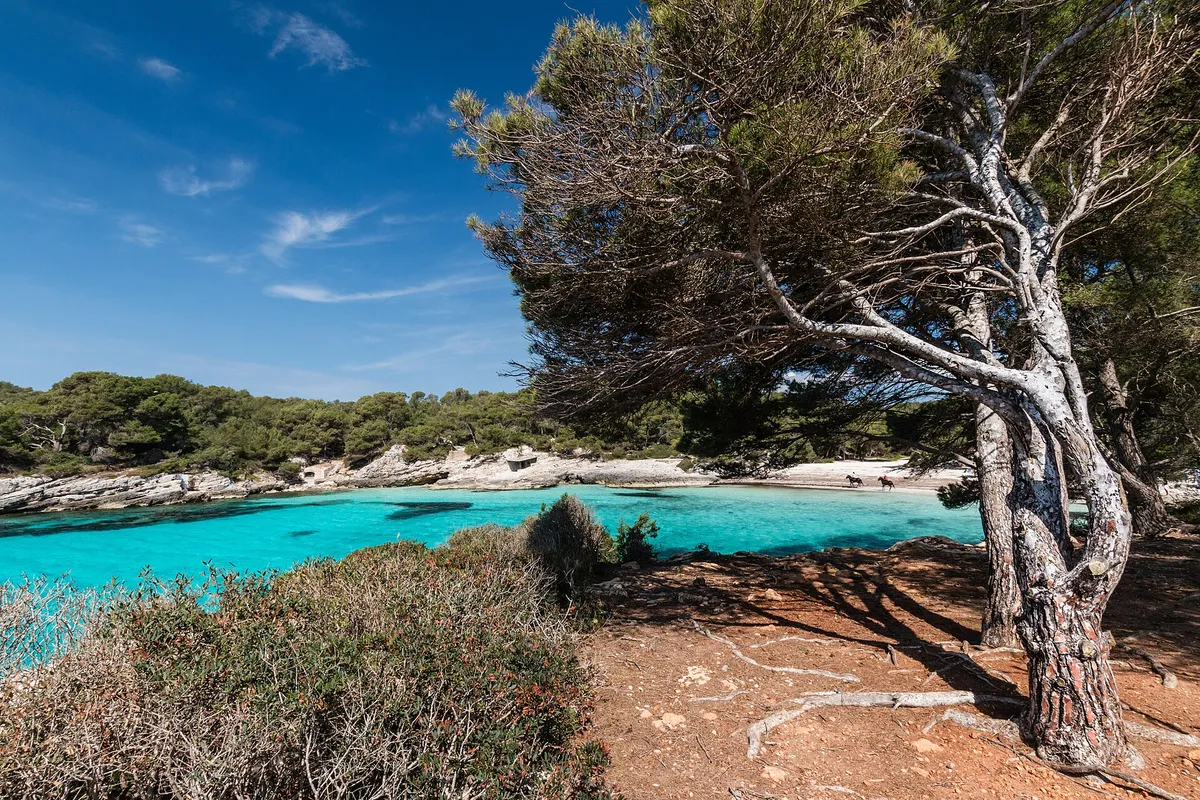
The shallows at Cala en Turqueta: two-hour swim stops in water like this are why sunscreen and drinking water top the list. Photo: Markus Trienke, Wikimedia Commons, CC BY-SA 2.0.
Quick answer The short answer: one soft bag, factor 50, a tablet before boarding - and three things that stay home
Pack a single soft bag with factor 50 reef-safe sunscreen, a brimmed hat that ties, a windbreaker, more water than you expect to drink, swimwear already worn under your clothes, and a phone in a waterproof pouch - and take a motion tablet 30-60 minutes before boarding, not after the swell starts. Leave drones, glass bottles and wheeled suitcases at the hotel. Every shared deck in the comparison, from the most-booked south-coast half-day to the reserve catamarans, rewards the same small bag.
Key takeaways
- The deck rule: shoes get wet or come off on every shared listing - wear swimwear under travel clothes and board barefoot.
- The sun maths: two hours on reflecting water burns through factor 30 fast; factor 50, reapplied at every anchor, is the working standard.
- The space rule: shared boats have no room for coolers, drones or glass bottles - one soft bag per person, nothing with wheels.
The One-Minute List
Every item below earns its place because a listing states its absence or a review records its loss. The pairs cross-check the pack list against the inclusions and restrictions printed on the tours compared here compared on this site, checked September 2026:
| Pack this | Leave at home |
|---|---|
| Factor 50 reef-safe sunscreen, applied before departure and reapplied every two hours | Aerosol sunscreen sprays - they blow off skin and deck before they stick |
| A brimmed hat that ties, sunglasses with a strap | A loose sunhat - the first crosswind collects it |
| Motion tablet taken 30-60 minutes before boarding (Biodramina in Spanish pharmacies) | Remedies still sitting in the hotel room |
| Water: about 1.5 litres per person on top of whatever the bar serves | Glass bottles - wrong on a moving deck and banned on most cove beaches |
| Swimwear already worn, plus a dry change for the ride home | A full change of clothes for every stop |
| Phone in a waterproof pouch on a lanyard | Loose phones in open pockets |
| One soft dry bag, 15-20 litres | Wheeled suitcases and hard coolers |
| A windbreaker or thin fleece for the return leg | Drones - no shared listing flies or permits them |
Why the two columns split where they do
The economics of the bag follow the inclusions. The full-day Ciutadella cruise cooks a paella lunch with sangria on board and states drinks included, so food is one decision the ticket makes for you. The most-booked Cala Galdana excursion includes a Menorcan appetiser and a drink, which is hospitality rather than a meal.
The budget half-days include neither, and the one-hour Mahon harbour circuit includes nothing but the hour. Food and drink settle half the packing question; the other half is sun, motion and the deck rules covered below.
Reef-Safe Sunscreen and the Two-Hour Sun Problem
Reef-safe, high-factor sunscreen is the number-one item on the list, and the reason is arithmetic rather than marketing. Two hours of Mediterranean sun on reflecting water burns through factor 30 fast: the surface acts as a mirror from below, a white deck bounces it back from the side, and the two-hour block is the standard unit of time on these trips - the Ciutadella day cruise states up to two hours at each of its two coves, and the Cala Galdana half-days run two 30-minute swim stops either side of an hour of open deck. The working kit is factor 50, applied a quarter of an hour before leaving the hotel so it binds to skin rather than to the first wave, reapplied at every anchor, with a second small tube living in the dry bag because the first one will end up in someone's bilge.
What reef-safe actually means on the label
The phrase has no legal definition, so the label needs reading rather than trusting. What it is reaching for is mineral filtration - zinc oxide and titanium dioxide - without the chemical filters oxybenzone and octinoxate that the best-known reef-protection laws single out. It matters more on a boat day than at a pool because Menorca's north coast sits inside a managed marine reserve, overseen within the Spanish ministry's marine-reserve programme: the water a swimmer floats over is the same water a meadow of protected seagrass grows in, and everything that washes off a swimmer goes into it.
No listing conditions its ticket on any particular cream - the choice stays with the traveller - but reviews on the sailing trips consistently show crews who care about the water they work in.
The exposure nobody plans for
Recent reviews of the paddleboard listing describe the trap precisely: the board is included at anchor, standing on it doubles the skin the sun can reach, and half a day passes before anyone reapplies. The same arithmetic applies to snorkellers - a back floats at the surface for as long as the mask is interesting - and to anyone asleep in the lee of the gunwale. The fix costs nothing: the reapplication clock follows the swim-stop clock, one tube of factor per two people per half-day, and lips and feet are the two burns reviewers report that no one plans.
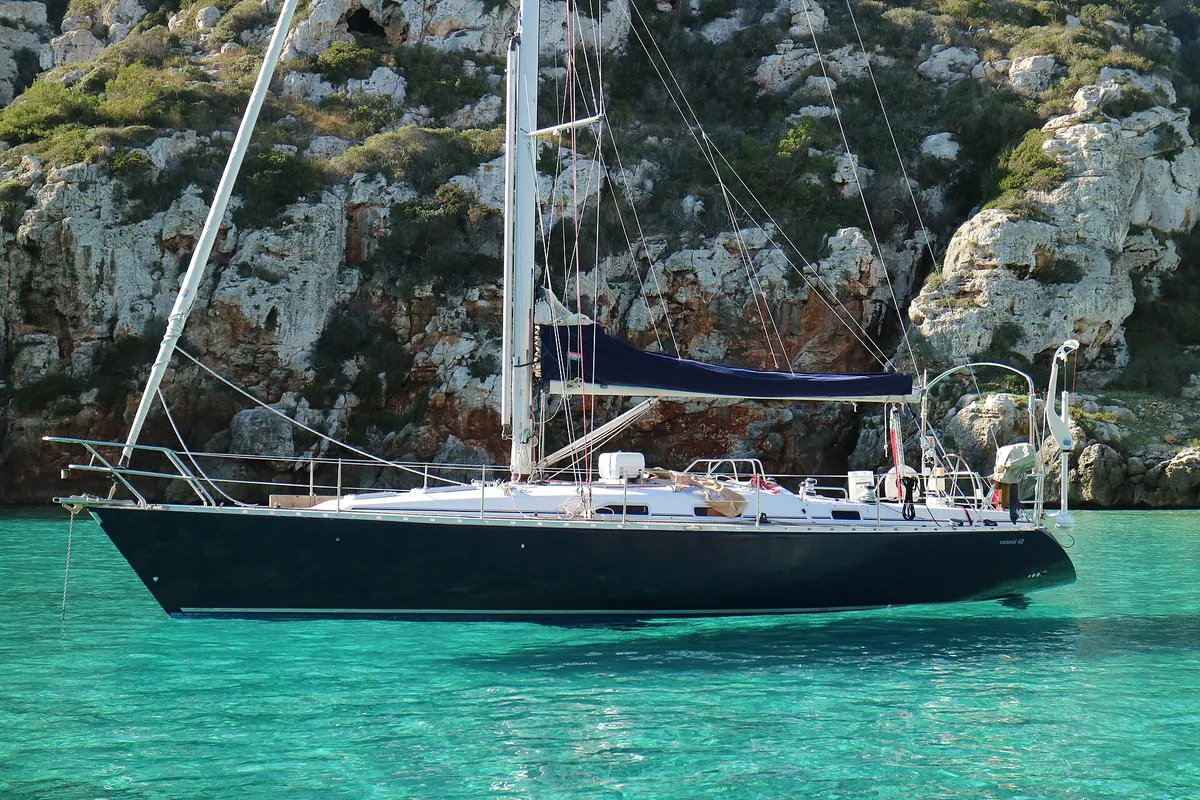
A yacht at anchor off Cala en Porter: a deck reflects sun from below as well as above, which is why the factor burns down long before the afternoon swim stop. Photo: Luiz82, Wikimedia Commons, CC BY-SA 4.0.
Motion Sickness: Take the Tablet Before You Need It
Motion tablets work best taken 30-60 minutes before boarding, a detail every pharmacy counter knows and no jetty teaches: once the stomach has a view of the swell, the tablet is an hour too late to matter. Spanish pharmacies sell Biodramina, the dimenhydrinate brand that is the default first purchase, over the counter at the green-cross farmacias that cluster around Ciutadella's port and across Mahon; the packet dose for adults is printed where every packet prints it, and drowsiness is the side effect to plan the evening around, not to discover on the boat. One tablet before a half-day, taken with water at the hotel rather than at the pontoon, is the pattern the calm reviewers describe; the queasy reviews are, almost uniformly, the stories of people who bought the box and carried it.
Which Menorca listings ask for it
The listings make the risk uneven, and the coastal logic is simple. The south coast is the sheltered side when the prevailing north wind blows: the Cala Galdana listing states its morning slot runs the calmest water, and the the booking platform weather note says departures run most days. The north coast is the exposed one: the Fornells coves listing states that the run needs calm seas and can be re-routed on a strong north wind, and the 12-guest catamaran hands the decision to the skipper, who picks the route each morning against wind and swell and can move the whole trip to the sheltered side.
The one-hour Mahon harbour circuit is the outlier - a harbour so sheltered the listing states it runs in almost any weather - and it is the right answer for anyone who wants the water without committing a stomach to it.
The non-tablet tactics reviews repeat
Ride mid-deck where the motion is smallest, keep eyes on the horizon rather than the phone, stay out of the cabin, eat lightly before boarding, and take the first swim stop as a reset - cold water on the face is the oldest remedy on the Med and it still works. Ginger in any form travels well in a day bag, and anyone who has ever been seasick on any other coast should simply assume the tablet, because the one crossing that decides the question is never the one to run the experiment on.
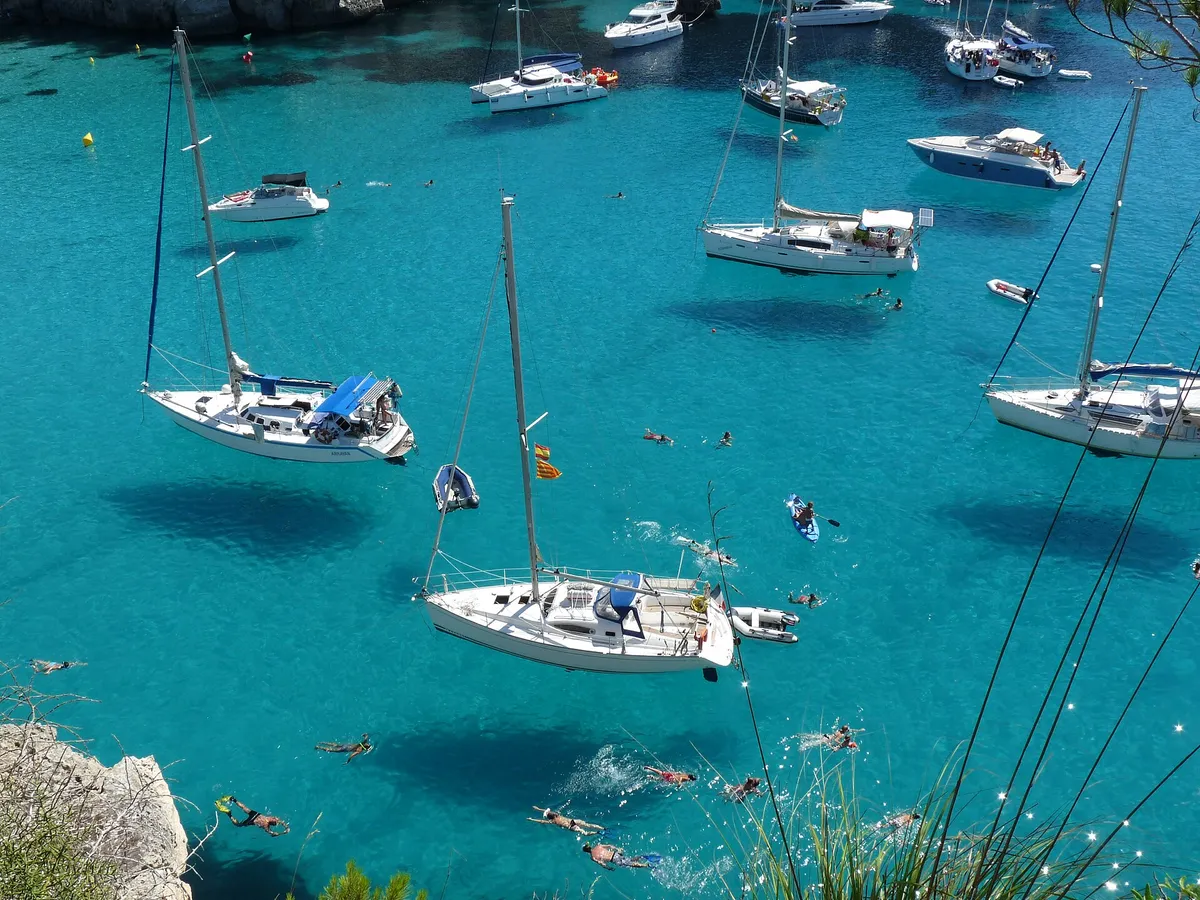
Cala Macarella, the archetypal swim stop: arrive in your swimwear under your clothes, because the changing room is the sea. Photo: Javier Casado Tirado, Wikimedia Commons, CC BY-SA 3.0.
Footwear, Dry Bags and the Water Question
Wear swimwear under your travel clothes and go barefoot on deck - the only footwear rule the listings enforce is that shoes get wet or come off. Boarding style decides the details. The Cala Galdana excursions board through beach water, which means the wade starts on the sand and ends at a pontoon or a gunwale with wet shorts as the uniform.
The Fornells catamarans board from a marina pontoon down a ladder - flip-flops come off at the top and live in a crate. The full-day Ciutadella cruise wades ashore at its cove stops, where the listing states beach landings are part of the shape of the day. Water shoes earn their keep in exactly two places on this list: shingle or rough rock underfoot at swim stops, and the beach wade where stonefish-adjacent hazards and hot sand meet.
On deck, everyone is barefoot, and the deck shoes stay in the bag.
The dry bag reviewers wish they had
The single most repeated wished-for item in recent reviews is a dry bag: a soft roll-top of 15-20 litres that holds phone, room key, book, towel and the spare sunscreen tube, squashes flat under a bench when not needed, and survives the spray line on the bow where backpacks do not. Zip-lock bags do the same work for a quarter of the price and a tenth of the dignity; hard cases do neither, because shared decks offer bench space and footwell space, not lockers. Boats supply shade canopies on most listings - the Fornells catamaran and the north-coast coves boat both rig one - but nothing on a shared deck is secure, so the bag travels with its owner and the packing is done the night before.
Water: the arithmetic of one drink
The cheaper listings include one drink at most: the Cala Galdana most-booked states a Menorcan appetiser and drink on board, which is a tapa and a glass rather than a service, and the budget half-day and the Mahon hour include no drinks at all. The full-day Ciutadella cruise is the exception that proves the rule - lunch and sangria are in the ticket - and the Fornells snorkel catamaran states unlimited drinks, which is why its reviews read the way they do. For everything else, the working number is about 1.5 litres of water per person beyond whatever the bar serves, more for children, and the bottles go in the dry bag because ice is scarce and a warm bottle at a swim stop is nobody's friend.
The snorkel gear included on the Fornells catamaran removes the one other purchase: rented fins are a chore the ticket already did.
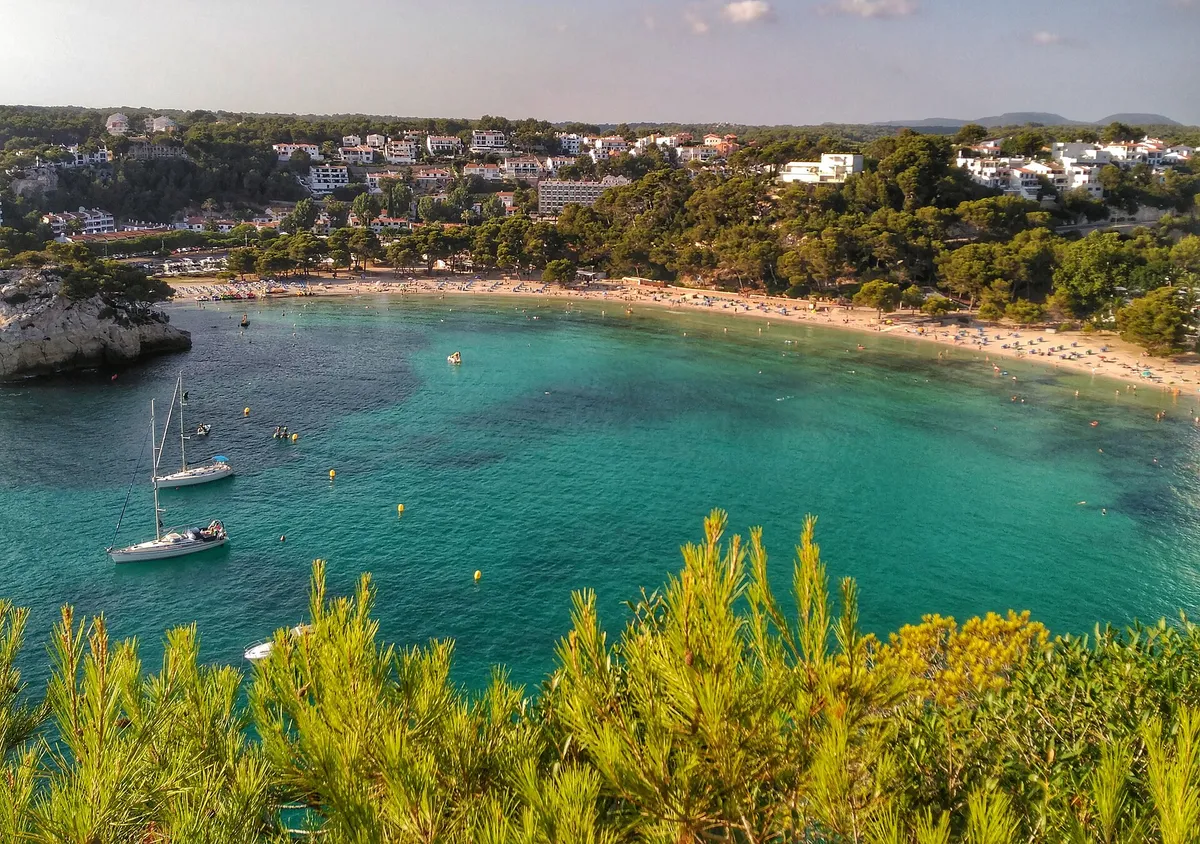
Cala Galdana's beach and pontoon: boarding here means wading, which is the whole footwear argument in one photograph. Photo: Travelinho, Wikimedia Commons, CC BY-SA 4.0.
What NOT to Bring
The shared boats have no space for four categories of luggage, and each one has a specific reason rather than a bureaucratic one. Drones: none of the tours compared here flies or permits them, decks launch and land nothing, passengers sit close together, and the north coast's managed waters are a poor classroom for a first flight - the drone stays home and the phone's camera does the day's work. Glass bottles: wrong physics on a moving deck and banned on most of the cove beaches the trips anchor at, which is why the beer the supermarket sold in glass stays at the hotel in favour of cans.
Oversized coolers: a shared deck is bench seating, not a galley, and the full-day cruise already cooks lunch in a real galley below - the largest container a shared trip wants is a soft bag. Wheeled suitcases: the day-trip pattern runs hotel-to-jetty on foot, and wheels meet their natural enemy at the beach boarding at Cala Galdana.
Valuables follow the same logic
Swimwear has no safe, bags pile at the stern of every shared deck, and recent reviews describe phones travelling in zip pockets and waterproof pouches rather than in baskets. The passport is an airport document, not a coastal one; the jewellery is a dinner decision; the laptop is a hotel-room decision. A boat day runs on a phone, a card and a room key, plus whatever cash the beach kiosks at the coves charge for a soft drink - small notes, not a roll of them.
The one document worth carrying is the booking confirmation on the phone itself, screenshot-protected against the marina's signal.
The Menorcan Detail: Wind and Shadeless Coves
Menorca runs two coastlines, and the bag differs by exactly one layer. The south coast is the sheltered side when the prevailing north wind blows, which is why the Cala Galdana and Ciutadella departures run most days; the north coast is open to the tramontana, and the Fornells listings state re-routes and sheltered-side moves when it blows hard. A windbreaker or thin fleece is the difference between enjoying the return leg at cruising speed and enduring it: recent reviews of the sunset sail repeat the same note, that two hours of moving air after dark needs a layer in August as much as in May.
A brimmed hat that ties earns its space twice - UV off the water is the fastest route to a scalp burn on an open deck, and an unsecured hat is gone on the first beam wind, a small tragedy reviewers report in every summer month.
Shade is the quiet detail
Land beaches sell shade - the umbrella rows on the east-coast playas are visible from the road - but swim-stop coves have none: cliffs, a boat and open sky, and the canopy on the boat belongs to whoever is sitting under it when the deck fills. The sun protection therefore travels with the swimmer: factor 50 on before the wade, the tied hat at anchor, a long-sleeved rash vest for anyone who burns, and children re-covered after every swim. The Spanish weather agency AEMET publishes the wind forecast the skippers work from, and its arrows are worth a look the night before: if the tramontana shows strong on the north coast, the south-coast listings are the ones that run - the month-by-month guide maps the same pattern across the season.
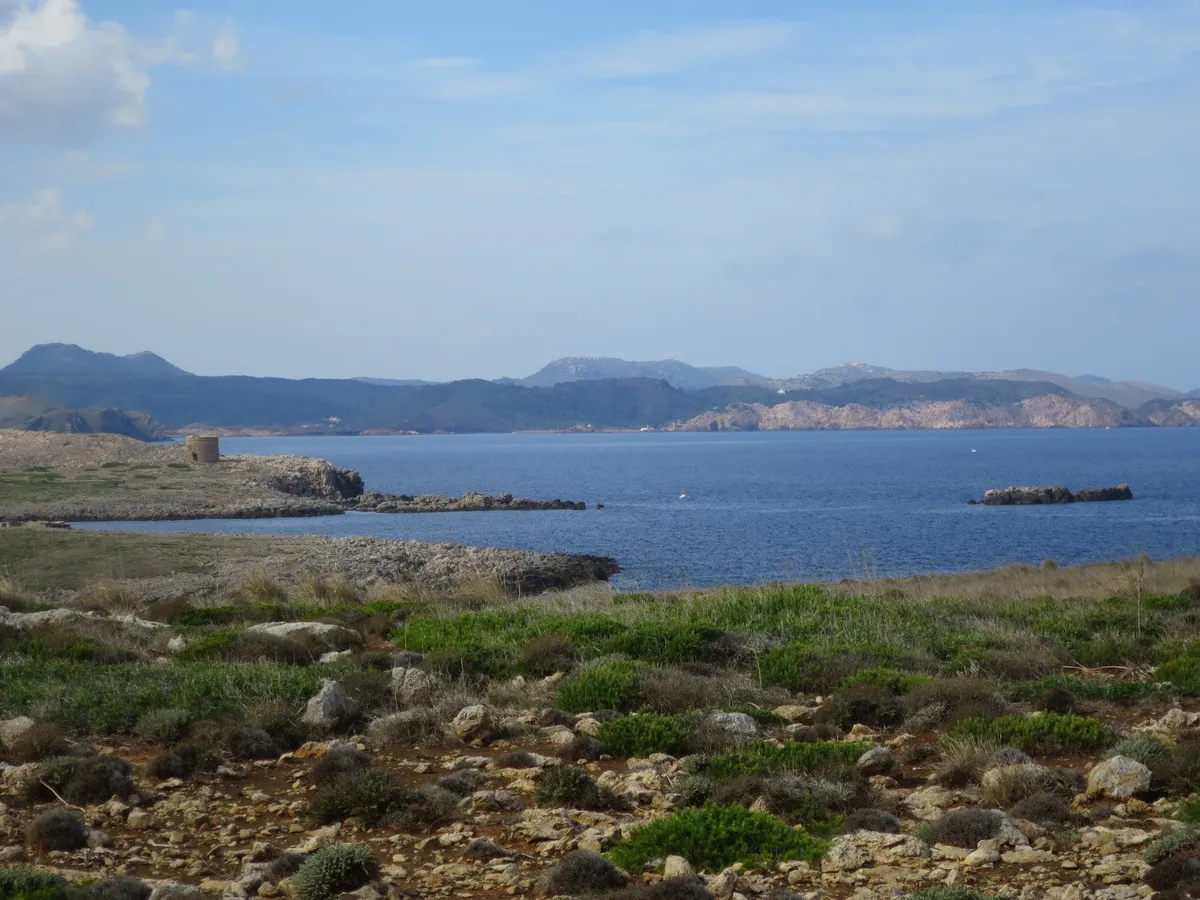
Cap de Cavalleria, the north coast's gate: nothing slows the tramontana here, which is why the tied hat and the windbreaker earn their space. Photo: Ben Salter, Wikimedia Commons, CC BY 2.0.
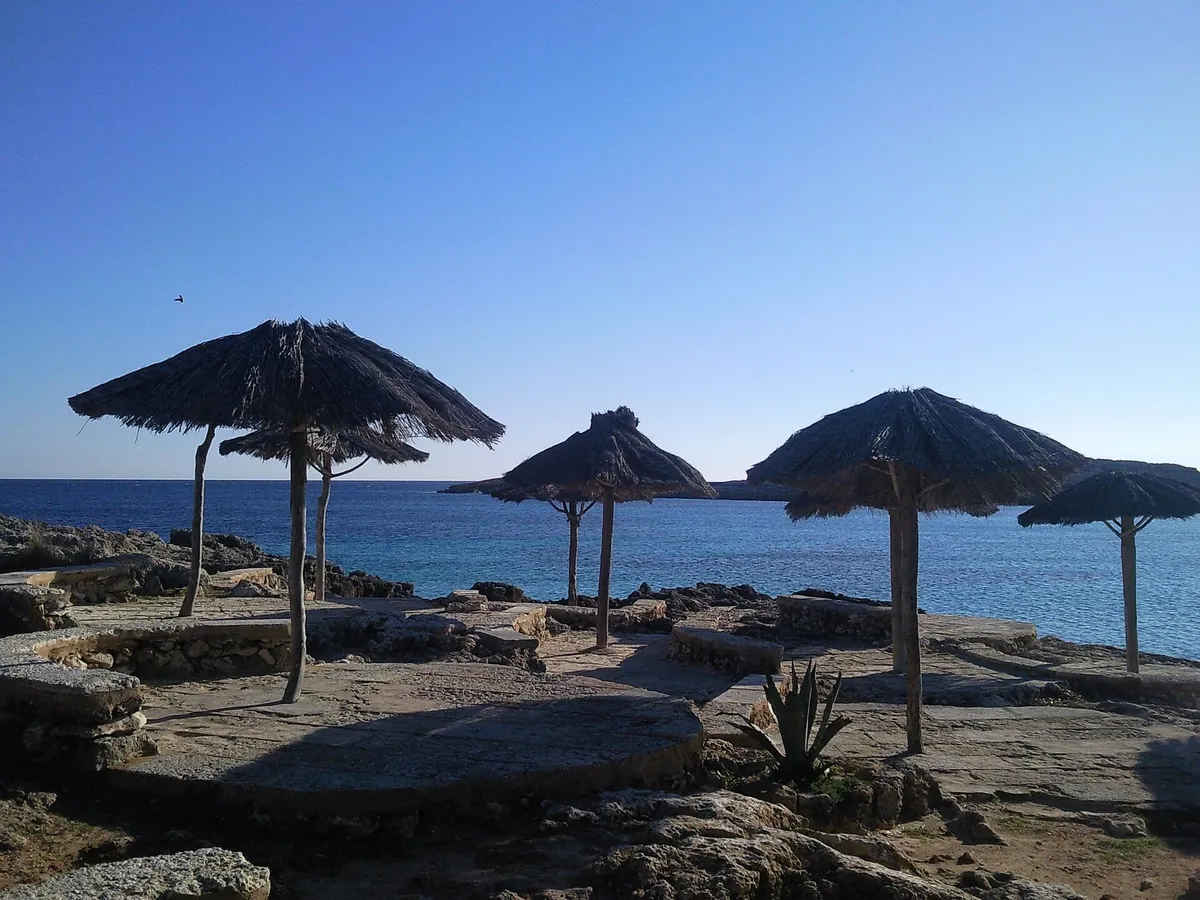
Umbrella lines on Playa Binibeca: land beaches sell shade, swim-stop coves bring none, so the protection travels with the swimmer. Photo: Santiago Lap, Wikimedia Commons, CC BY-SA 3.0.
Packing Questions
What should I bring on a Menorca boat trip?
Factor 50 reef-safe sunscreen (applied before leaving the hotel, reapplied every two hours), a brimmed hat that ties, sunglasses, a windbreaker for the return leg, about 1.5 litres of water per person on top of the bar, swimwear already worn under clothes, a towel, a phone in a waterproof pouch, and one 15-20 litre soft dry bag to keep it all together. Take a motion tablet 30-60 minutes before boarding - Biodramina is the pharmacy standard in Spain. Leave drones, glass bottles, coolers, wheels and valuables at the hotel: shared decks have no space for any of them, and the listings state their boarding rules accordingly.
Do I need water shoes on Menorca boat trips?
Rarely on the boat, sometimes in the water. On deck, the listings' only footwear rule is that shoes get wet or come off, so everyone boards barefoot and flip-flops live in the bag. Water shoes earn their ticket at swim stops with shingle or rough rock underfoot and at the beach landings the south-coast full day uses, where the listing states passengers wade ashore. Ladder-boarding catamarans from marina pontoons need nothing at all. The practical rule: pack them if a pair already exists in the wardrobe; buy a special pair only for a trip with beach landings on it.
Can you swim in the sea in Menorca?
Yes - swimming is the point of most of the listings. Every shared trip in this comparison except the one-hour Mahon harbour circuit includes swim stops, from 30 minutes at a time on the Cala Galdana half-days to up to two hours at each cove on the full-day cruise. The sea is warm from May into October, and the north coast swims inside the Menorca marine reserve, where snorkelling is legal and unregulated for individuals and the water is protected posidonia ground. No listing requires swimming ability: stops are optional on all of them, and crews state that non-swimmers stay aboard with shade and a view.
How much water should I bring on a boat day?
About 1.5 litres per person beyond whatever the bar serves, more for children and for the big south-coast decks in July heat. The arithmetic behind that number is in the water section: the cheapest listings include one drink at most, ice is scarce offshore, and a swim stop dehydrates faster than a beach hour because the wind hides the sweat.
Can I bring a small cooler on board?
A soft, squashable one, maybe; a hard or wheeled cooler, no. Shared decks offer bench and footwell space, not storage, and the crew moves people and gear around a full boat - the listing terms put oversized items firmly off the guest list. The working rule the reviews support: anything that cannot sit under your seat stays at the hotel, and snacks travel in the dry bag, not a box.
The Verdict: One Soft Bag, Packed the Night Before
The bag that works on Menorca's boats fits every listing in the comparison: soft, small, and packed the night before rather than the morning of. Nothing on this page needs a shopping trip beyond a pharmacy and a supermarket - sunscreen, tablets, water and a roll-top bag - because the boats supply the expensive parts themselves: lunch on the full day, gear on the snorkel catamaran, a paddleboard at anchor on the most-booked half-day. The failure pattern in recent reviews is not a missing gadget; it is low factor applied once at ten in the morning, a tablet swallowed after the swell started, and a loose hat lost on the first beam wind. Pack against those three and the ticket does the rest. When the bag is by the door, the nine-boat comparison is the last step - chosen by coast, duration and group size rather than by what fits in a cupboard.
Next step on the comparison: the price-and-format table on the homepage sets every listing side by side, and the two pages this guide keeps returning to are fornells snorkel catamaran and south coast boat excursion - the fastest way from reading to a price.